Guide 01 / PUA
What is polyurea?
Polyurea forms when an isocyanate meets an amine resin. The reaction is fast enough that the coating can gel before it has time to run, even on vertical surfaces.
How it forms
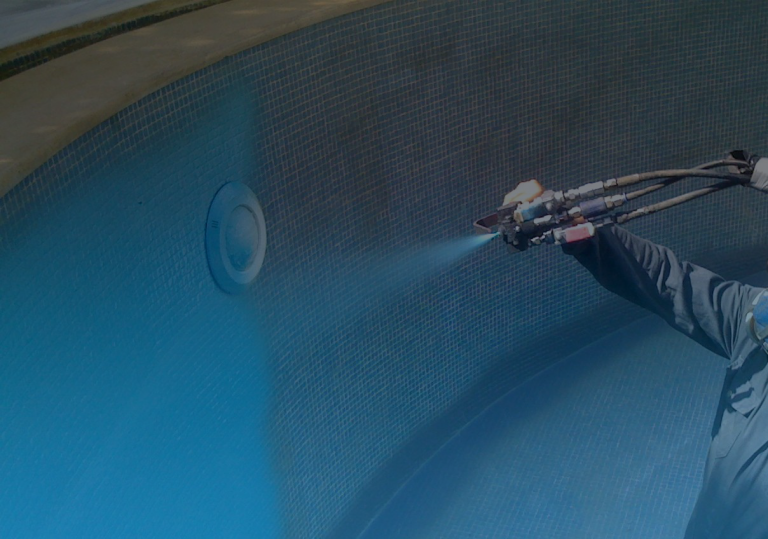
Polyurea comes as two liquids, often called the A side and the B side. The A side is an isocyanate. The B side is a blend of amine terminated resins. When the two meet at the gun, they react into a tough, rubbery film.
Why speed matters
The reaction is fast and far less sensitive to moisture and cold than many coatings. That lets crews build thick layers, coat vertical walls and return areas to service quickly. It also means there is almost no working time, so the equipment does the mixing.
Aromatic and aliphatic
Most polyurea is aromatic, which is tough but can darken and chalk in sunlight. Aliphatic polyurea holds color better outdoors. Many systems use an aromatic base coat with a color stable topcoat.
What it asks of the job
Surface preparation still decides adhesion. Concrete is usually ground or blasted and primed, steel is blasted, and the data sheet sets the film thickness. Trained applicators and well maintained rigs matter as much as the material.
Do
- Prime porous surfaces when the data sheet asks
- Check film thickness as you go
- Keep a log of temperatures and humidity
- Plan topcoats for sun exposure
Avoid
- Treating it like a roll on paint
- Skipping prep because it cures fast
- Ignoring color change outdoors
- Spraying with an untrained crew
Common questions
Is polyurea a type of polyurethane?
They are close relatives that share the isocyanate side. Polyurea uses amine resins on the other side, while polyurethane uses polyols, and that difference changes how each one cures.
Can polyurea be rolled on?
Pure fast set polyurea cannot. Some slower polyaspartic and hand applied products exist for small areas, but they behave differently from spray grade polyurea.
General information only. Follow the product data sheet and safety data sheet for every product.